
“A new study says that the economic impact of college — in postgraduation wages — is very much tied to the income of students’ families growing up, with students from wealthier families earning more than others. Some might assume that this difference is due to enrollment patterns, in that wealthier high school students are more likely than their less well-off counterparts to enroll at highly competitive colleges whose graduates are more likely to earn more in their careers. But the study found this impact even after controlling for a number of factors, such as competitiveness of college attended.”
Category: issues
Buy A Discounted Ticket To Leave For A Stranger, Says Venue In Rome
“The initiative will run for just over two weeks at the Teatro delle Muse, where people buying tickets for a variety show will be able to purchase an extra seat at a reduced price to leave at the box office for someone else.” It’s based on the old Naples tradition of “caffe sospeso.”
Tom Morris: Artistic Leadership Is About Vision And People, Not Buildings
As part of our Artistic Leadership Series, Tom Morris responds to Joe Horowitz’s Lincoln Center essay: “We live in an era of growing niche audiences for music – institutions cannot address that reality if frozen in fancy yet over-large and rigid concert halls that trap them artistically, financially and organizationally… Could it be that doing less but better is a more promising strategy?”
New York City Proposes A New Cultural Plan. Commence Debate…
“The fight continues to be not only about housing and arts and culture, but about what kind of city New York will be. The question I pose is: Can we have both the people and the price of land be part of how this city is defined? How this plan plays out may give us part of the answer.”
Immersive Virtual Reality In The Classroom
“Emerging evidence suggests that one of VR’s biggest strengths is its ability to tap student emotions, notably empathy and the can-do confidence known as self-efficacy.” Teachers are using the technology to put students in the shoes of Syrian refugees and police in Flint, Michigan.
Culture On a Hill – Did America’s Performing Arts Center Model Lead To A Dead End?
This week we’re publishing Joe Horowitz’s essay “Bing, Bernstein, and Balanchine Fifty Years Later” looking at the opening of Lincoln Center 50 years later. Lincoln Center was built to be a launch pad for American performing arts; instead perhaps it may have been a cul de sac. Along with Joe’s essay, we offer several response essays.
Culture On a Hill – Did America’s Performing Arts Center Model Lead To A Dead End?
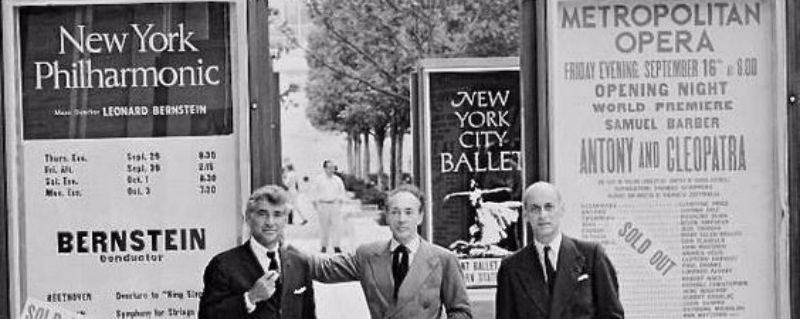
Fifty years ago Lincoln Center opened in New York City. Unquestionably, the project was a success for the neighborhood, sparking a rejuvenation of Manhattan’s upper West Side and providing needed homes for the city’s major performing arts companies. It was also an influential idea – creating a campus for the performing arts and drawing attention to the arts as a critical mass of excellence – and it set off a generation of new performing arts centers around America.
So influential has the Lincoln Center idea been, that fifty years on it seems important to weigh the idea against its impact on American artistic life. This is probably unfair. Lincoln Center was built as an artistic home and this it has been and continues to be. It has also been one of the premiere showcases of American cultural life and has presented most of the important artists of the past 50 years. Jobs well done.
But we’d like to consider Lincoln Center the idea, in the bigger American cultural context. Joseph Horowitz, as a fellow at NYU’s Center for Ballet and the Arts has written an essay that suggests that Lincoln Center, which re-situated the New York Philharmonic, The Metropolitan Opera, and New York City Ballet with the aim of becoming a launching pad for a new era of America’s performing arts, instead represents a kind of cul de sac, and that artistic leadership in America has struggled ever since. We publish his essay here along with five responses to his provocation.
Additionally, on Friday, February 17, 2017 at 1:30PM (Mountain Time), we will live-stream a discussion from the University of Texas at El Paso and the Copland in Mexico Festival. Check back here to watch or catch it in the archive later.
THE ESSAY
 Lincoln Center Snapshot: Bing, Bernstein, and Balanchine Fifty Years Later – By Joe Horowitz
With the arrival of the Metropolitan Opera at Lincoln Center fifty years ago, the three main institutional constituents were put in place. New synergies were expected to ignite higher achievements at the Met in tandem with the New York Philharmonic and New York City Ballet. In retrospect, it is unsurprising that this never happened. The twenty-first century poses exigent challenges to performing arts institutions – challenges that may be more readily met where “bigger is better” assumptions were never implemented.
RESPONSES
 Is artistic leadership at America’s arts institutions lacking? Is this at the root of declining relevancy? – By Diane Ragsdale
Perhaps now is the time to prioritize artistic vision over business acumen; to grant artists primacy within the arts institution; and to shift attention from wealthy donors to the community-at-large. Perhaps now is the time to embrace the paradox of being Public Arts Institutions: a part of society—but a part which must remain apart in order to fulfill its role.
 Artistic Leadership Is About Vision And People, Not Buildings – By Thomas W. Morris
We live in an era of growing niche audiences for music – institutions cannot address that reality if frozen in fancy yet over-large and rigid concert halls that trap them artistically, financially and organizationally… Could it be that doing less but better is a more promising strategy?
 Is The Institutionalization Of Our Arts A Dead End? – By Douglas McLennan
While there is an argument to be made for clustering together arts organizations and cultural buildings, the idea has to be animated in some way. Why should these organizations physically be together? Is it about art or about buildings? If it’s about buildings – creating a kind of critical mass of cultural activity that benefits by proximity – then the art comes to be defined by the buildings and how they’re used.
 An Experiment for American Dance? – By Deborah Jowitt
And that was that for the American Dance Theater: a valiant, unsustainable effort to identify the New York State Theater as welcoming to other New York City companies beside New York City Ballet (and possibly to introduce modern dance to a larger audience). The idea of a repertory company that would present the works of various contemporary choreographers in a theater in which none of them could afford to perform with their own companies (or could have filled) was admirable. It was also unworkable. For whatever reason, shared seasons materialize either.
 A Museum Culture of Symphony Orchestras? – David Gier
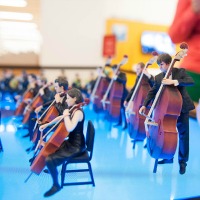
We have indeed created a museum culture out of this art form, one which is perceived as irrelevant for many reasons, an unnecessary result of a focus on the “masterpieces” we all know and love at the expense of the creation of our own voice.
The Most Infamous Ticket-Scalper In History Is Now Fighting Against Scalping
Ken Lowson’s company, Wiseguy Tickets, used one of the first-ever bots to buy up and resell millions of tickets to shows and stadium concerts. “Seven years after his Los Angeles office was raided by shotgun-wielding FBI agents, Lowson [says] he’s switched teams. Now, he’s out to expose the secrets of the ticket industry in a bid to make sure tickets are sold directly to their fans.”
Fake News In Historical Context (We’ve Dealt With This Before)
“The production of fake, semi-false, and true but compromising snippets of news reached a peak in eighteenth-century London, when newspapers began to circulate among a broad public. In 1788, London had ten dailies, eight tri-weeklies, and nine weekly newspapers, and their stories usually consisted of only a paragraph. “Paragraph men” picked up gossip in coffee houses, scribbled a few sentences on a scrap of paper, and turned in the text to printer-publishers, who often set it in the next available space of a column of type on a composing stone. Some paragraph men received payment; some contented themselves with manipulating public opinion for or against a public figure, a play, or a book.”
And Now… An Artist Who Doesn’t Understand How The NEA Works Argues Against The NEA… On NPR!
“Well, the basic problem with the government supporting the arts in the way that it does – through the NEA and through direct grants to producing organizations – is that it stands in the way of free market competition, which is really the best way for arts organizations to build new audiences…”